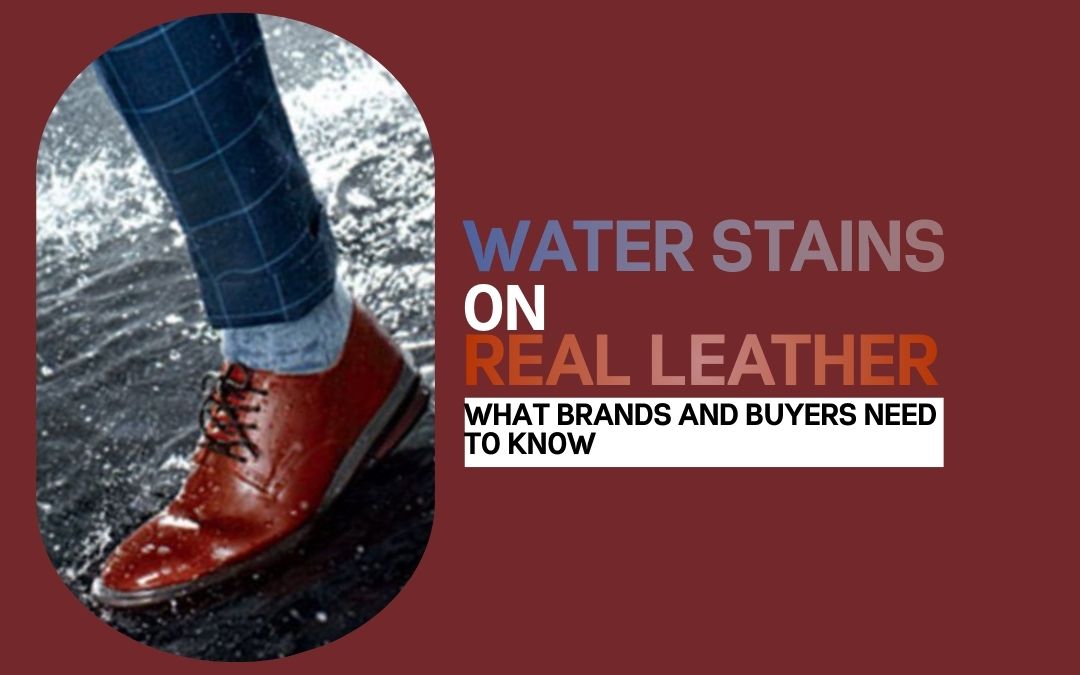
Introduction: Why Water Stains Matter More Than You Think
Water stains are the dumbest “problem” in dress shoes—because they’re not really a water problem. They’re a truth problem. A couple of rain drops hit the vamp, the customer looks down, and suddenly your “premium” leather shoe is getting treated like a defective toaster.
And yes, it’s cosmetic. But cosmetics sell. In retail, perception is the product. One ugly tide mark and your buyer isn’t thinking “leather is a natural material,” they’re thinking “this brand cuts corners.” For B2B buyers, that’s the nightmare: after-care performance becomes a public audit of your factory standards, your finishing consistency, and whether your materials team knows what they’re doing—or just ordering whatever was cheapest this month.
How Water Interacts with Leather: The Science Behind the Stain
Leather isn’t plastic. It’s a dense mat of collagen fibers that used to be skin, and it still behaves like a living thing that’s been “frozen” in time—full of oils, waxes, dyes, tanning residues, and whatever topcoat the factory decided to spray on to make it look pretty under showroom lights.
So when water hits leather, two things happen at once:
1) Absorption (water moves into the fiber structure), and
2) Displacement (water pushes oils/dyes around and then evaporates unevenly).
Smooth, open-pore leathers can drink water fast. Heavily finished leathers can resist at first… until water sneaks in through creases, stitching, or tiny defects in the finish, and then you get patchy blotches that look even worse because the surface was supposed to be uniform.
Are water stains permanent? Sometimes. Not always.
- Temporary marks are usually surface-level: uneven wetting that dries into a visible edge.
- Deep-set stains happen when water pulls dye, salt, or tanning residue into new patterns, or when the leather dries too fast and “locks” the damage in place.
Drying speed matters more than people think. Fast heat (radiator, hair dryer, sunlight) doesn’t just dry water—it can drive out internal oils and leave stiff, thirsty leather behind. And thirsty leather doesn’t age nicely. It cracks, it scuffs weird, and it starts looking “cheap” even if it wasn’t.
Tanning and finishing are the quiet villains here. Higher-grade leather tends to have more consistent fiber density and takes dye more evenly, so when it gets wet it’s less likely to dry in a polka-dot mess. Factory finishing also controls stain visibility: a well-built finish system can reduce harsh tide lines, while a rushed finish can make every drop look like a permanent scar.
How to Remove Water Stains from Leather Shoes Safely
First rule: don’t panic-clean. Panic-cleaning is how people turn a mild water mark into a full-blown tonal disaster.
Immediate steps when leather gets wet
- Blot, don’t rub. Press with a clean cloth to pull moisture out. Rubbing grinds grime into the grain and can strip finish.
- Reshape the shoe. Use shoe trees if you have them. No shoe trees? Stuff with paper and change it as it dampens.
- Controlled drying. Room temperature. Good airflow. No heater blasts. No direct sun. Slow is your friend here.
Mistakes that worsen water damage
Let’s name the usual crimes:
- Hair dryers (fast drying = hard edges + oil loss)
- Leaving shoes wet in a box (hello mildew smell)
- Heat + “miracle” cleaner cocktails (finish gets cloudy, color shifts, regret follows)
Treating visible water stains and marks
Here’s the fix that actually works more often than people expect: even re-dampening. Sounds backwards. It isn’t.
If you have a sharp water edge, the goal is to remove the edge, not “scrub the stain.” Lightly dampen a clean cloth (not dripping), and gently wipe a wider area around the mark to blend the moisture gradient. You’re basically telling the leather, “Dry evenly this time.” Then let it dry slowly.
After drying, condition. Water strips and redistributes oils. Conditioning restores flexibility and reduces that dry, flat look. Go light at first—too much product can darken leather unevenly or clog pores. A thin coat, let it sit, buff, then reassess.
When stains indicate deeper leather issues
Sometimes the stain is the symptom, not the disease. If the leather is low-grade, overly corrected, poorly dyed, or finished inconsistently, water exposes it fast. One shoe bounces back; the other looks like it got into a bar fight. That mismatch usually isn’t “customer error.” It’s a materials and finishing problem.
Good uppers recover. Bad uppers retaliate.
Manufacturing Quality Determines Water Resistance
A lot of brands talk about “care” like it’s a moral virtue. Please. Care helps, sure, Care helps, sure—but as a premium men’s shoe factory, we know the real ceiling is set at the production level: how well a shoe handles moisture starts with leather selection, tanning, and finishing.”
Leather selection and preparation at factory level
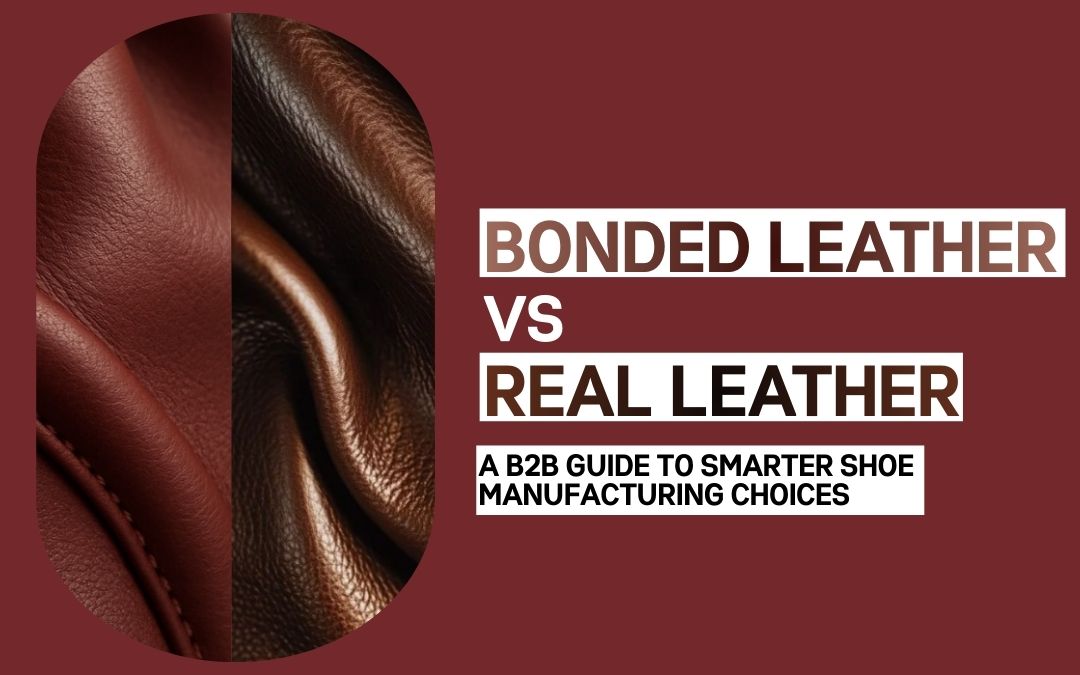
Full-grain leather generally behaves better because the surface hasn’t been sanded down into submission. Corrected grain can look flawless out of the box, but it often relies on heavier finishing to hide defects—and heavy finishing can fail in ugly ways when water gets under it. Bonded “leather” isn’t even in the same conversation.
Why premium leather ages more evenly—even after moisture exposure—comes down to consistency: tighter fiber structure, steadier dye penetration, and fewer surprises when the leather gets wet and dries again.
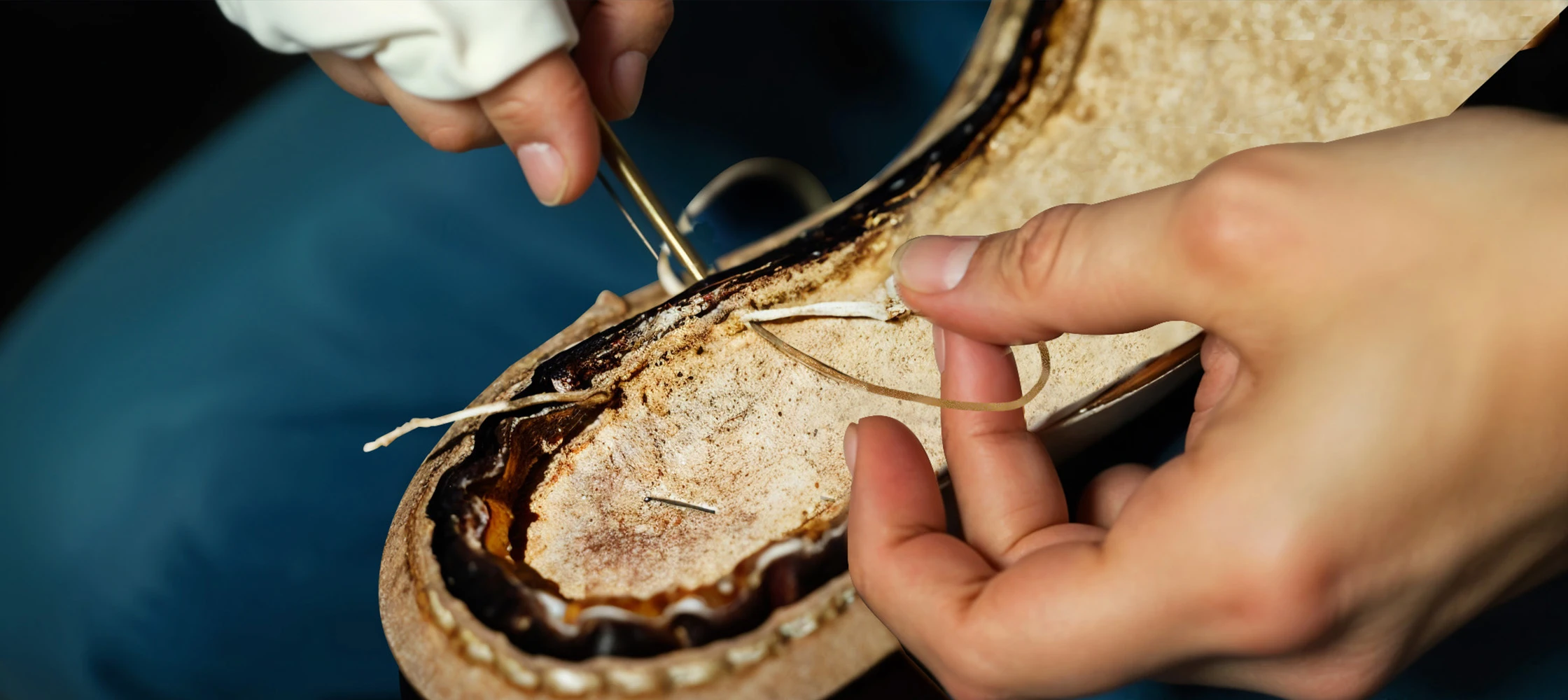
Goodyear welted construction and moisture management
Construction matters because water doesn’t just hit the upper. It creeps inside. A Goodyear welted shoe gives you a more structured build and typically better long-term serviceability—especially if the wearer gets caught in bad weather and keeps wearing the shoe for years.
And welted structures can dry more naturally because they’re built to be repaired and maintained, not treated as disposable. Glued constructions can trap moisture in awkward places, and when the inside stays damp, you can get warping, lining issues, and early breakdown.
If you want a quick reference for the build itself (and what to spec for), point your product team here: Goodyear Welt Shoes & Boots.
Patina hand-finishing and water behavior
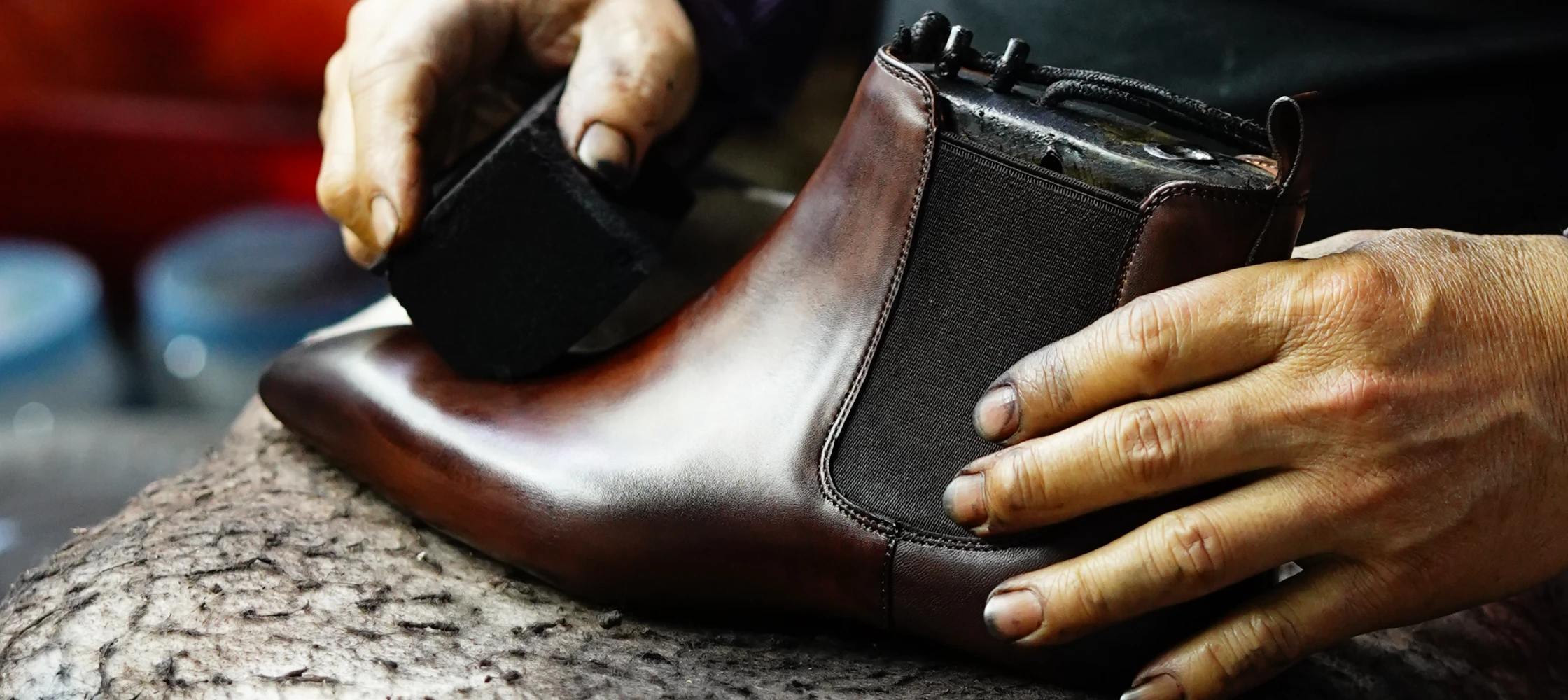
Hand-dyed patina is its own animal. It can react differently to water than uniform factory-dyed finishes because patina involves layered color. Done well, it ages with personality. Done poorly, it blotches like a cheap leather belt.
The trick is skilled finishing: controlled dye layers, proper drying time between coats, and a finish system that doesn’t freak out the moment it sees moisture.
(Natural mention: At Hengxin, leather selection, Goodyear welted construction, and hand-applied patina finishing are designed to help shoes recover gracefully from everyday exposure, rather than fail prematurely.)
And if you’re building a line where stain resistance and “bounce-back” matters, don’t just pick a random silhouette and hope for the best—start with something proven and spec it right, like a clean Oxford program: Mens Oxford Dress Shoes.
What B2B Buyers Should Consider When Water Issues Become Customer Complaints
Water complaints are rarely about water. They’re about returns. Margin bleed. Support tickets. Retailers getting spicy in your inbox.
Material shortcuts show up after delivery in predictable ways:
- Staining that won’t blend out
- Discoloration around creases
- Drying that leaves the leather stiff, then cracked
- One shoe aging differently than the other (buyers hate this)
Water sensitivity is basically a stress test. It reveals sloppy dye work, unstable finishing, inconsistent leather batches, and factories that don’t control process variables tightly enough.
Reliable manufacturers reduce long-term risk by doing the boring stuff well: stable sourcing, repeatable finishing, and clear material standards for private-label programs—so the same SKU doesn’t behave like three different shoes across three production runs.
And yes, care performance can support brand positioning. When your shoes recover from normal life (rain, wet sidewalks, commute chaos), retailers notice. Suit shops and premium retailers stick with product that doesn’t turn into a customer-service bonfire after the first bad weather week.
Conclusion: Water Stains Are a Test of Leather Quality, Not Just Care
Water exposure is unavoidable. Failure isn’t. When a shoe can’t handle a normal rainy day without looking ruined, that’s not “the customer’s fault.” It’s a materials/finish/construction decision that got made months earlier, long before anyone unboxed the pair.
Quality leather and solid construction recover. Poor materials don’t—they just age loudly and badly. For brands, choosing the right manufacturing partner protects your reputation long after delivery, when the real-world wear starts and the excuses stop working.
FAQ
Does water stain leather shoes permanently?
Sometimes. Light marks are often blendable with even re-dampening and conditioning. Deep stains happen when dye/residue shifts or the leather dries too fast and sets a hard edge.
How do you get water stains out of leather shoes?
Blot, dry slowly, then blend the mark by lightly dampening a wider area so it dries evenly. Afterward, condition lightly and buff. Don’t scrub the spot like it’s a kitchen counter.
Can water damage full-grain leather?
Yes—but it usually recovers better than heavily corrected or low-grade uppers. The bigger risk is fast heat drying, which can pull oils out and leave the leather stiff.
Does Goodyear welted construction handle moisture better?
It often holds up better over time because the shoe is built for longevity and repair, and it tends to manage internal structure more reliably than many glued builds when moisture gets involved.
How should leather shoes be dried after rain?
Room temperature, airflow, shoe trees (or paper), and patience. No radiator, no hair dryer, no direct sun. Slow drying prevents harsh tide lines and reduces oil loss.