Introduction: Material Choice Is a Brand Positioning Decision
When you choose materials for shoes, you are not just picking what they are made of. You are shaping how your brand is seen in the market.
For B2B buyers, this choice affects how the product looks, feels, lasts, and sells. The material sends a clear message about whether a brand focuses on low cost, balance, or long-term value.
Why the leather debate matters for B2B buyers?
Synthetic leather and real leather lead to very different business outcomes. The material you choose affects the final retail price, how customers judge quality, how long the shoes stay usable, and how often they are returned.
For example, a shoe made with a weaker upper may look fine at first but start peeling or cracking after a few months, which can lead to customer complaints and higher return rates.
Faux leather vs real leather is not just about cost
Materials play a big role in cost and perception. Synthetic leather usually costs less, which can help keep prices low.
Real leather costs more but often feels better, ages well, and builds trust with buyers. Shoes that last longer are worn for more time, which improves customer satisfaction and reduces returns caused by early damage.
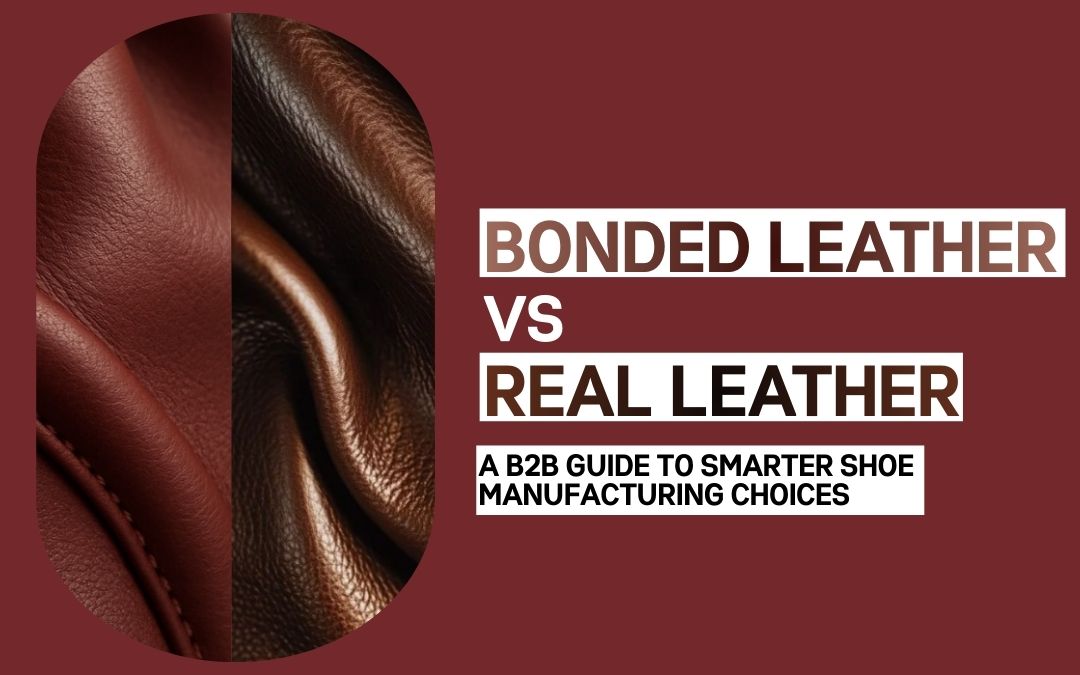
The difference between faux leather and real leather goes beyond price. Faux leather is a man-made material, often made from plastic layers designed to look like leather.
Real leather comes from animal hide and has natural fibers.
These fibers allow leather to stretch slightly and recover its shape. This affects how the shoe fits and how it handles daily use.
From a manufacturing perspective
From the factory side, material choice changes how shoes are made and how consistent the output can be.
Real leather can adapt during production and minor adjustments. Synthetic materials are more rigid and less forgiving, which can increase waste if errors happen during cutting or stitching.
Premium dress shoes, especially those using traditional construction, place very different demands on materials.
Premium dress shoes often use traditional methods like stitched soles instead of glued ones. These methods put extra stress on the upper material. Real leather can handle this stress because it stretches and molds to the foot over time.
Synthetic leather may struggle under the same pressure, leading to tearing, cracking, or poor shape retention.
What Is Faux Leather and What Is Real Leather?
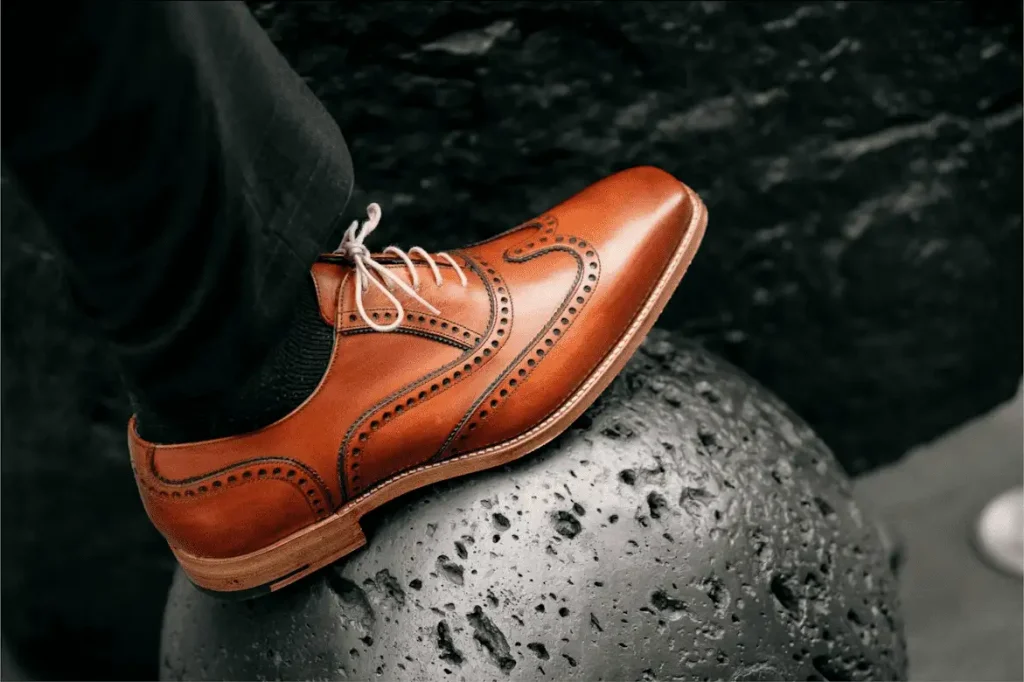
Faux leather and real leather are two common materials used in shoe production. They may look similar at first glance, but they are made in very different ways and perform differently over time.
For B2B footwear buyers, understanding this difference is important because it affects shoe quality, production methods, and customer satisfaction.
Faux leather is a man-made material designed to copy the look of leather. Real leather comes from animal hide and keeps its natural fiber structure.
These differences matter a lot in shoe manufacturing, especially for long-term wear and premium shoes.
Understanding Faux (Synthetic) Leather
What synthetic leather is made of?
Synthetic leather is not made from animal hide. It is created using plastic based materials layered on top of a fabric base. The goal is to make it look like real leather while keeping costs lower. This type of material is commonly used in entry level and budget footwear.
PU and PVC coatings over fabric backings
Most faux leather used in shoes is made with PU or PVC.
PU stands for polyurethane. It is a softer plastic coating that feels more flexible and looks closer to real leather.
PVC stands for polyvinyl chloride. It is a harder plastic coating that is more durable on the surface but feels stiffer.
Both PU and PVC are applied over a fabric backing, usually polyester or cotton. The fabric gives basic shape, while the plastic layer provides the leather like appearance.
Why is it attractive for entry-level pricing?
Synthetic leather costs less than real leather and is easier to source in large volumes. This makes it attractive for brands focused on low price points.
It also offers a uniform appearance, meaning every sheet looks almost the same, which helps with visual consistency in mass production.
Structural limitations in shoe manufacturing
While faux leather works for simple designs, it has clear limits during production and use.
Poor breathability
Breathability means how well air can pass through a material. Faux leather does not breathe well because the plastic coating blocks airflow.
This can trap heat and moisture inside the shoe, which may cause discomfort for the wearer during long use.
Limited tolerance for stitching and lasting
Lasting is the process of pulling the upper material tightly over a shoe mold to shape it. Faux leather does not stretch like real leather.
When pulled too hard, it can tear, crack, or lose shape. Stitching can also weaken the material over time because the plastic layer does not recover once punctured by needles.
Understanding Real Leather
Full-grain vs corrected-grain leather
Real leather comes in different types based on how much it is processed.
Full-grain leather is the top layer of the hide. It keeps its natural surface and fibers. It is strong, breathable, and ages well.
Corrected-grain leather has been sanded and coated to remove surface marks. It looks more uniform but loses some natural strength and breathability.
Both types are still real leather, but full-grain leather is considered higher quality in premium leather shoes.
Natural fiber structure and elasticity
Real leather has natural fibers that are woven in a complex way. This gives it elasticity, which means it can stretch slightly and return to its shape.
This helps shoes fit better over time and reduces cracking during repeated movement.
Why real leather behave differently during lasting and wear?
During lasting, real leather can be pulled, shaped, and adjusted without tearing. It molds to the shoe form and later to the foot of the wearer.
During daily wear, it creases gradually instead of cracking. This is why real leather shoes often become more comfortable with age and last longer.
Faux Leather vs Real Leather at a Glance
| Feature | Faux Leather Shoes | Real Leather Shoes |
| Material source | Plastic coating over fabric | Animal hide |
| Breathability | Low | High |
| Stretch and recovery | Minimal | Natural elasticity |
| Stitching tolerance | Limited | Strong |
| Lasting performance | Weak under tension | Handles tension well |
| Typical use | Entry-level footwear | Premium and long-lasting shoes |
Performance Differences in Daily Wear and Long-Term Use
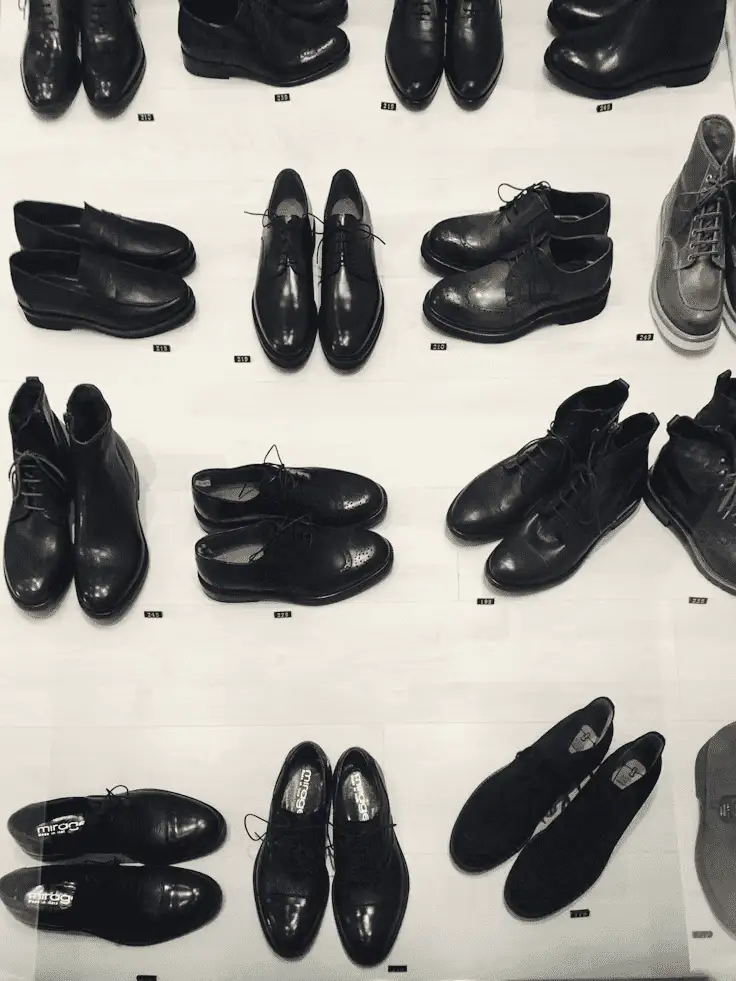
Material choice becomes most obvious after the shoes are worn daily and over long periods.
The way a shoe reacts to movement, heat, moisture, and pressure depends heavily on whether it is made from faux leather or real leather.
These differences affect durability, comfort, and how long the product remains sellable and wearable.
Durability and Aging
Faux leather tends to break down from the outside layer first because it relies on a plastic surface bonded to fabric. Over time, repeated bending causes the surface to crack, peel, or separate from the backing.
Once this happens, the damage cannot be reversed and the shoe quickly looks worn out.
Real leather ages through gradual surface change rather than failure.
With regular use, it develops a patina, which is a soft shine and color depth that forms as the leather absorbs oils from the air and the wearer.
This aging is often seen as a quality feature rather than a flaw.
Real leather also holds its shape better when paired with proper shoe construction. The natural fibers support the structure of the shoe, helping it keep a clean silhouette even after years of use.
Comfort and Fit Over Time
Breathability plays a major role in daily comfort. Faux leather traps heat and moisture because air cannot pass through the plastic layer. This can lead to sweaty feet and discomfort during long wear.
Real leather allows air to move in and out, helping control moisture. This creates a drier and more comfortable interior, especially for leather dress shoes worn for full workdays.
Real leather adapts to the foot shape over time. As it stretches slightly and responds to pressure, it creates a personalized fit.
Synthetic shoes often feel tight but lifeless because the material does not stretch or soften, so the fit stays rigid even after months of wear.
Maintenance and Repairability
Faux leather shoes are rarely repairable because the surface layer cannot be restored once it peels or cracks. Glues and patches do not bond well to plastic coatings, making repairs short lived and unreliable.
Real leather works well with resole-friendly constructions, which means the sole can be replaced without damaging the upper. This allows shoes to be worn for many more years with proper care.
For premium brands, this has clear after-sales implications. Real leather shoes support polishing, conditioning, resoling, and professional repairs.
This enables long term customer service, strengthens brand trust, and supports higher value positioning in the leather footwear market.
Manufacturing and Craftsmanship Limitations
Construction Compatibility
Faux leather is unsuitable for Goodyear welted construction, which is a traditional method where the upper, insole, and outsole are stitched together.
This method requires the upper material to hold stitches under strong and repeated tension.
Faux leather is made with a plastic surface over fabric, so the stitching holes weaken the material over time. In real use, this can lead to loose stitching or separation after months of walking.
Stitch holding strength is closely linked to welt durability. The welt is the strip of material that runs around the edge of the shoe and holds the sole in place. Real leather has dense natural fibers that grip thread firmly.
Faux leather lacks this fiber depth, so that stitches can pull out more easily. This is why real leather dress shoes can often be resoled, while synthetic shoes usually cannot.
The role of cork filling and leather footbeds becomes clear in traditional construction. Cork filling is placed inside the shoe to provide cushioning and support. Over time, it compresses and shapes to the foot. Leather footbeds work with this process because they breathe and flex naturally.
Faux leather blocks airflow and stays stiff, which can trap moisture and reduce long-term comfort.
In daily life, leather shoes often feel better with age, while synthetic shoes do not improve over time.
Finishing Techniques: Patina vs Surface Coatings
Hand-applied patina requires natural leather fibers that can absorb dye. Patina is created by slowly building layers of color into the leather surface. This process depends on the leather being open and porous.
Faux leather cannot absorb dyes evenly because the surface is sealed with plastic, so color sits on top instead of soaking in.
In real life, patina finishing exposes true material quality. On real leather, slight color variations add depth and character.
On faux leather, attempts to create patina often show uneven patches, cracking, or peeling edges. This makes faux leather unsuitable for premium finishing used in high quality leather shoes.
Quality Control at Scale
Consistency is a common issue with low-grade synthetic materials. Variations in plastic coating thickness or fabric backing can cause uneven results during cutting, stitching, and shaping.
One batch may perform well, while another may show early damage during production.
Experienced manufacturers prefer leather for stable bulk production because it behaves more predictably. High-quality leather responds well to skilled handling and traditional processes.
Factories with advanced craftsmanship use careful material selection and trained workers to reduce defect rates.
This leads to fewer rejected pairs, more consistent sizing, and better long term results for B2B shoe production.
Choosing the Right Material Strategy for Your Brand
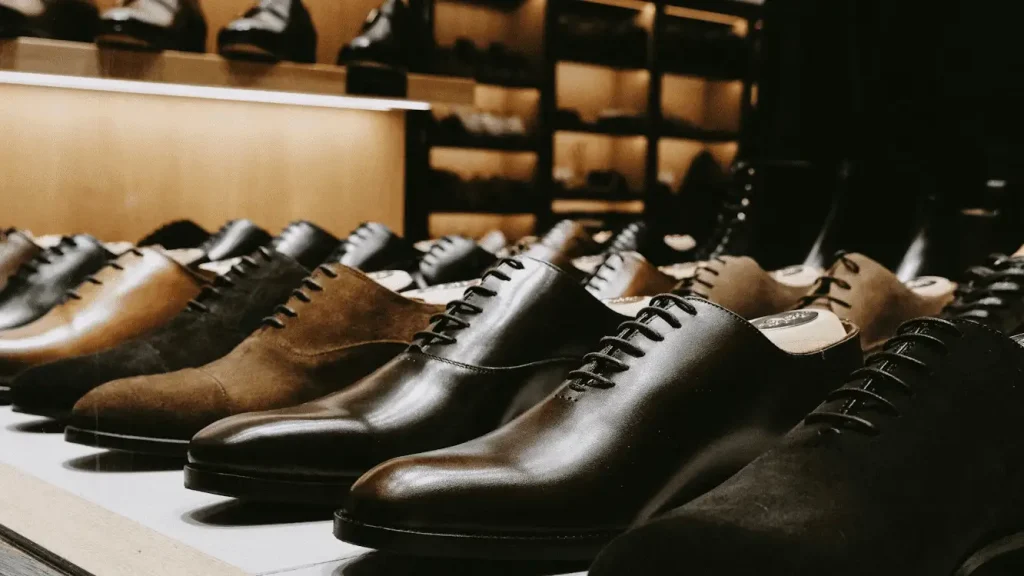
Choosing between synthetic leather and real leather is not only a cost decision. It is a long term brand decision.
The material you choose affects who buys your shoes, how long they keep them, and whether they come back for another pair.
For B2B buyers, the right strategy depends on market position, customer expectations, and manufacturing support.
Entry-Level vs Premium Market Positioning
At the entry level, synthetic leather may make sense in certain situations.
Brands targeting first time buyers, trend driven styles, or short use products often focus on keeping prices as low as possible.
For example, a fashion brand selling seasonal office shoes for occasional wear may choose synthetic leather to hit a strict price point and move volume quickly.
Real leather becomes non-negotiable when a brand moves into mid to premium pricing.
Customers paying more expect shoes to last, improve with wear, and feel comfortable over long days. A brand selling leather dress shoes for work, events, or daily office use risks damaging its reputation if the material cracks or peels within a year.
At this level, real leather is not a feature. It is a requirement.
Brand Upgrade Opportunities for Suit Shops and Private Labels
Suit shops and private labels have a strong opportunity to upgrade their footwear offerings. Customers buying premium suits already value fit, fabric, and craftsmanship.
Pairing these suits with synthetic leather shoes often creates a mismatch in perceived quality.
Matching premium suits with leather footwear helps complete the outfit story. For example, a customer who spends on a tailored suit expects shoes that age well and hold shape.
Real leather shoes align with this expectation and elevate the overall brand image.
Materials also help justify higher retail pricing. When customers understand that shoes are made from full-grain leather with traditional construction, the price feels reasonable.
More importantly, customers expect longevity at mid to high price points.
They want shoes that can be worn for years, not replaced after one season. Real leather supports this expectation through durability, repair options, and comfort over time.
Manufacturing Support That Solves B2B Pain Points
The right manufacturing partner makes material strategy easier to execute. Material sourcing transparency helps brands clearly explain what they are selling.
Small MOQ and style flexibility are important for brands testing new collections. This allows a gradual move from synthetic to real leather without a large upfront risk.
For example, a brand can launch one leather dress shoe style first before expanding the range.
Reliable lead times and consistent quality reduce operational stress. When materials behave predictably, production stays on schedule and defect rates stay low.
Manufacturers like Hengxin, with long-term experience in leather dress shoes, help brands transition from synthetic to real leather collections smoothly.
Their experience supports better material selection, stable production, and fewer surprises, allowing brands to focus on growth rather than problem-solving.
Conclusion: Real Leather Is an Investment, Not a Cost
Faux leather and real leather serve different business goals, and neither is right for every brand.
Synthetic materials can work for low price, short-use products, but brands focused on longevity, reputation, and repeat customers benefit far more from real leather.
Real leather enables stronger construction, supports advanced craftsmanship like Goodyear welting and patina finishing, and delivers shoes that improve with wear instead of breaking down.
Over time, this reduces long term risk by lowering return rates, complaints, and brand damage. Choosing real leather is only part of the decision.
Choosing the right manufacturing partner is just as important, because skilled factories turn good materials into reliable products that customers trust and return for.
FAQ
Is faux leather real leather or completely artificial?
Faux leather is completely artificial. It is a man made material created using plastic coatings like PU or PVC placed over a fabric base.
It does not come from animal hide and does not have natural leather fibers. Faux leather is designed to look like real leather, but it does not age, breathe, or stretch the same way as genuine leather shoes.
Which lasts longer: synthetic or leather shoes?
Real leather shoes last longer than synthetic leather shoes in most cases. Genuine leather is made of natural fibers that handle bending, moisture, and daily wear better over time.
Synthetic leather often cracks, peels, or separates after extended use, especially in dress shoes worn regularly.
Why do real leather shoes cost more to produce?
Real leather shoes cost more to produce because high quality leather is more expensive to source and requires skilled labor to work with.
Leather cutting, stitching, and shaping take more time and experience. Traditional construction methods used in leather dress shoes also add to production cost but improve durability and comfort.
Are synthetic leather shoes suitable for dress shoes?
Synthetic leather shoes can be suitable for low cost or short term dress shoes, such as for occasional events or fashion focused collections.
However, they are not ideal for premium dress shoes because they lack breathability, long term comfort, and durability expected at higher price points.
Why can’t faux leather be used for Goodyear welted shoes?
Faux leather cannot be used for Goodyear welted shoes because it does not hold stitches well under constant tension. Goodyear welting requires strong natural fibers to secure the upper, welt, and sole together.
Synthetic leather relies on plastic layers that can tear or weaken, making the construction unreliable over time.