Introduction: Why Leather Choice Defines a Brand’s Long-Term Value
I’ve watched too many buyers do the same thing: pinch the upper, squint at the grain, nod like they’ve solved it… and sign off on a “leather” program that turns into a customer-service bonfire three months later.
Because the label says leather. The sample looks fine. The price is “comfortable.” And nobody wants to be the person who slows the launch down with annoying material questions.
Here’s the thing. Footwear has a word problem. “Leather” gets used for everything from a proper hide to a sheet made out of glued fibers with a plastic skin stamped on top. Customers don’t read your spec sheet. They read the product page, then they bend the toe box with their life.
So B2B buyers can’t shop uppers like they’re picking paint colors. Surface appearance and cost are the easy parts. The hard part is what happens after 50,000 flexes, sweaty commutes, and a groom stepping on the heel at a wedding. Your material choice decides whether you earn trust—or refunds.
What Is Bonded Leather? Understanding the Material Behind the Label
How bonded leather is made (and why it exists)
Bonded leather is the “use every scrap” answer to a messy industry. Take leftover leather trimmings, grind them into fibers, mix those fibers into binders (usually synthetic), and press it into a sheet. That sheet gets a coating. Then embossing rolls stamp a grain pattern so it looks like a hide from arm’s length.
And yes, it can look convincing in a catalog photo. That’s the point.
Bonded leather meaning in footwear manufacturing
In shoe programs, bonded leather is usually a pricing tool. It’s used when a buyer needs a dressy look at a mass-market cost—uniform shoes, entry-level “office” dress shoes, seasonal runs where the brand expects one-and-done customers.
It also gets marketed as “leather” because there is leather in it. Just not in the way people assume. Performance mostly comes from the binder and the surface film, not from a continuous natural fiber structure like real hide leather.
Where it falls apart: dress shoe flex points
Dress shoes don’t fail politely. They fail right where the upper bends and works hardest:
- Toe box and vamp: constant flexing and creasing pressure
- Quarters: tension from lacing and heel movement
- High-wear scuff zones: where coating takes hits, then doesn’t recover
Bonded leather tends to crease like a coated sheet, not like skin. The coating can crack. The surface can peel. And when it happens, the customer doesn’t say “Ah, material limitations.” They say your shoes are trash. Fair or not, that’s how the story ends.
Real Leather in Dress Shoes: Performance Beyond Appearance
What defines real leather in footwear production
When buyers say “real leather” in dress shoes, they usually mean hide-based leather—most commonly full-grain or top-grain. Different finishes, different price points, same big difference: it’s still a continuous hide layer with natural fibers doing the heavy lifting.
That fiber structure is the reason real leather behaves like a premium upper instead of a costume.
Breathability, durability, and the good kind of aging
Real leather creases. Of course it does. But it creases like a living material—forming lines, softening in hot spots, getting deeper in color where hands and polish go, then settling into a look that customers call “broken in,” not “ruined.”
Bonded leather doesn’t “break in.” It gives up.
Real leather also plays nicer with long-term ownership: conditioning, polishing, edge dressing, and basic care actually have something to work with. You’re feeding a material, not repainting a film.
Creasing vs cracking (this is where brands win or lose)
Customers forgive creases. They expect them. Creases look like use.
Cracking and peeling? That reads as cheap, even if the customer paid premium money. And once that perception hits, it stains the brand—not just that model.
Goodyear welted construction needs uppers that can take a long life
If you’re building shoes meant for resoles, the upper has to survive long enough to justify the repair. That’s one reason premium Goodyear welted programs lean hard on real leather uppers, linings, and structural components.
If you want the full construction side of this, Hengxin lays out its approach on the Goodyear Welt page—the point isn’t the marketing, it’s the basic truth: durable construction plus flimsy upper material is a mismatch.
(Natural mention: At Hengxin, real leather is the foundation that allows Goodyear welted shoes to perform as intended over years of wear.)
Bonded Leather vs Real Leather: A Practical Comparison for B2B Buyers
Cost vs value: the part buyers hate hearing
Bonded leather lowers unit cost. That’s the sales pitch.
But value is what happens after the shipment lands: complaints, returns, credits, discounting to clear inventory, retailers quietly deciding they “won’t reorder that one.” The savings don’t disappear—they just move downstream and show up as brand damage.
And brand damage is expensive because you can’t spreadsheet your way out of it quickly.
Short-term savings vs long-term brand risk
Bonded leather risk is worst when you sell formal and semi-formal shoes—exactly the category where customers care about appearance and feel, and where they notice failure fast. A cracked vamp in a sneaker is annoying. A peeling cap-toe in a suit shop is humiliating.
This is why suit retailers tend to avoid bonded leather dress shoes. Not because they’re material nerds. Because they don’t want Saturday returns with angry customers in wedding outfits.
Visual quality and finishing: where bonded leather hits a wall
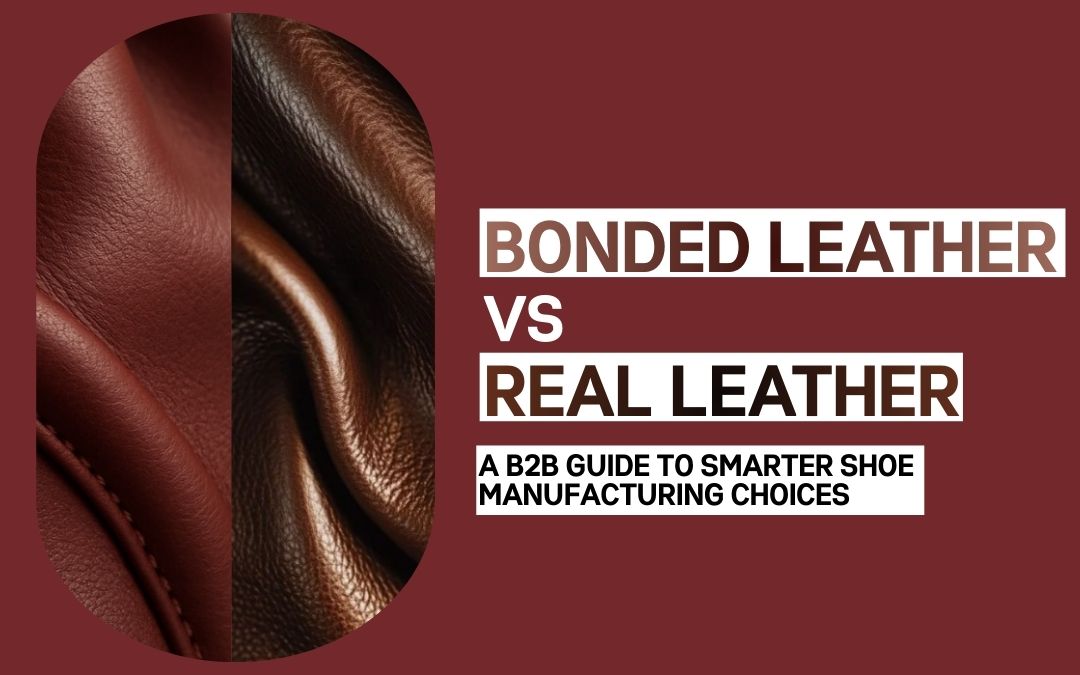
Bonded leather can look smooth and uniform. Sometimes too uniform, like a printed texture.
Real leather gives you finishing range. Depth. Subtle burnishing. Color transitions that don’t look spray-painted.
And patina? The real kind—hand work with layers, highs and lows, edges that glow—depends on leather that can accept and hold dye and creams. A coated surface fights that. You can tint it, sure. But you’re mostly coloring the coating, not building a finish into the material.
Material transparency = premium credibility
If you’re charging premium prices, your buyers and end customers want clarity. Say what it is. Stand behind it. That confidence sells.
Vague wording and fuzzy “leather” claims sell one order… then generate five emails.
Why Serious Brands Choose Real Leather Manufacturers
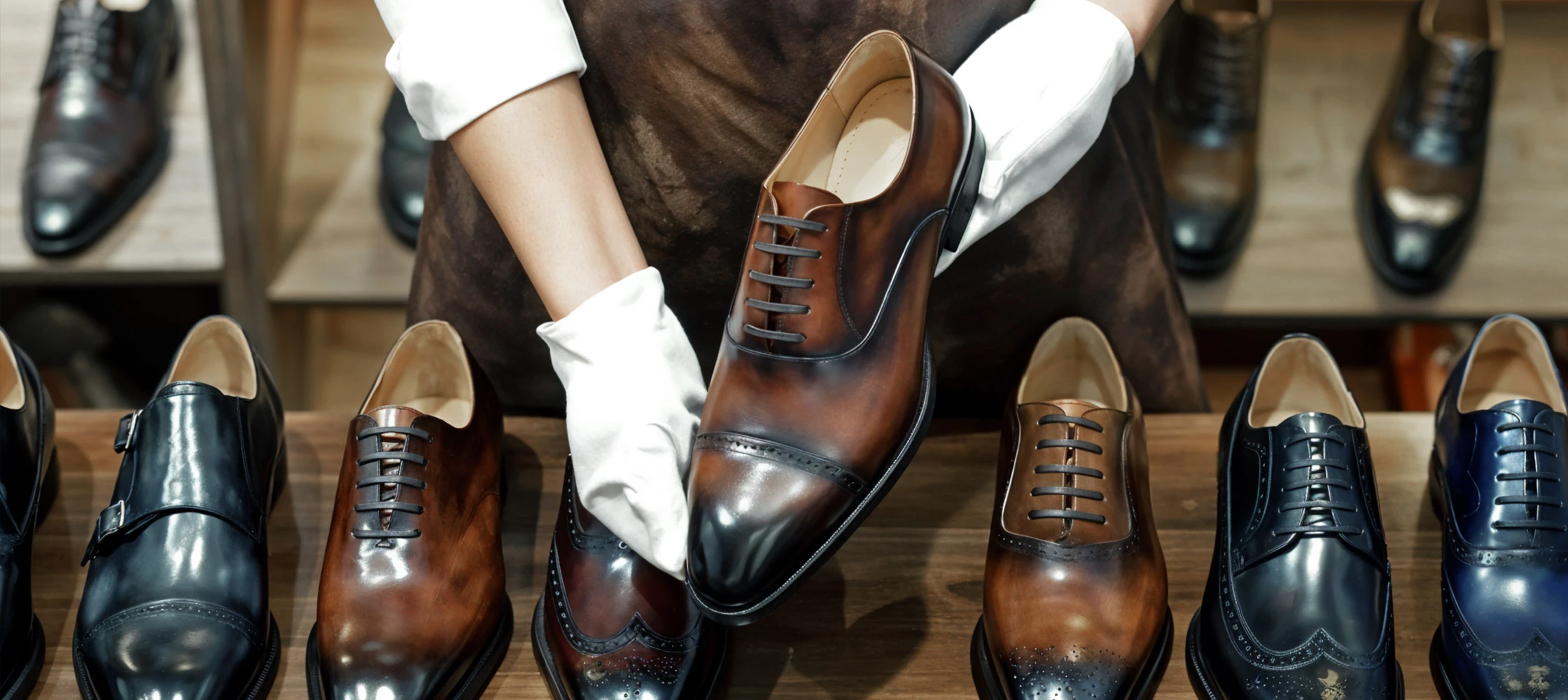
Material is positioning, whether you admit it or not. Real leather signals restraint and quality. It tells the customer, “Yes, you can wear these again. And again.” That message matters even more when your shoes sit next to tailored suits, wool trousers, or premium belts—products that already trained the customer to expect longevity.
Working with a real leather factory also changes how development feels. You’re not gambling on mystery sheets and hoping the coating behaves. You’re specifying hides, thickness, hand feel, and finishing targets—then building a repeatable program around it. If you want a window into that side, Hengxin’s Materials overview is a decent starting point.
And the boring stuff matters too: stable sourcing, consistent QC, and a factory that can support private-label realities like small MOQs, sampling cycles, and last adjustments without acting like you’re wasting their time. That’s why pages like Private Label Dress Shoes exist in the first place—brands need partners, not just cartons.
Craftsmanship is the other gap. Real leather opens doors: hand finishing, sharper edge work, and patina options that don’t look like costume paint. If you’re trying to differentiate, that’s where you get paid.
Conclusion: Choosing Real Leather Is Choosing Long-Term Brand Equity
Bonded leather can hit a price point. Sometimes that’s the whole brief. Fine.
But if you’re building a brand that wants repeat buyers, retailer trust, and the right to charge more next season, bonded leather is a short road with a cliff at the end.
Real leather supports durability, finishing, repair stories, and that quiet confidence customers feel the second they pick the shoe up. For B2B buyers, this choice isn’t academic. It’s business.
FAQ
What is bonded leather in shoes?
Bonded leather is shredded leather fiber mixed with binders, pressed into sheets, then coated and embossed to mimic grain.
Is bonded leather considered real leather?
It contains leather fiber, but it doesn’t perform like hide-based leather. Most behavior comes from the binder and coating.
Bonded leather vs leather shoes: which lasts longer?
Real leather uppers usually last longer, especially at flex points where bonded leather coatings often crack or peel.
Can bonded leather be used in Goodyear welted shoes?
You can build it, but it’s a bad match for long-life, resole-friendly positioning. The upper may fail first.
Does bonded leather crack or peel over time?
It can—especially on the vamp and toe where repeated bending stresses the surface film.